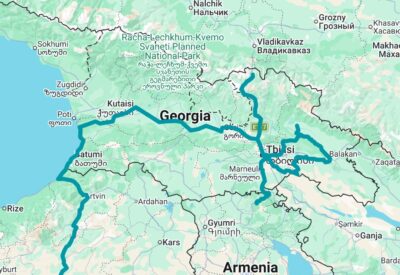
Overnight stops (in date order): Tsikhisdziri (x4); Gonio Beach; Kutaisi (x4); Gori; Tblisi (x4); Stepantsminda; Chokhelni; Tblisi; Alaverdi (x4); Sighnaghi, Udabno, Sadakhlo
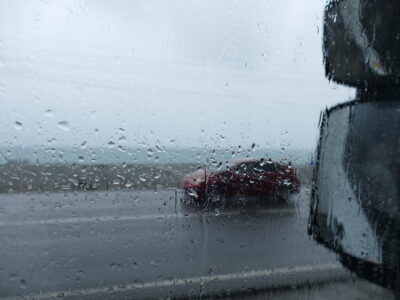
We crossed into Georgia on the first rainy day we had seen in weeks.
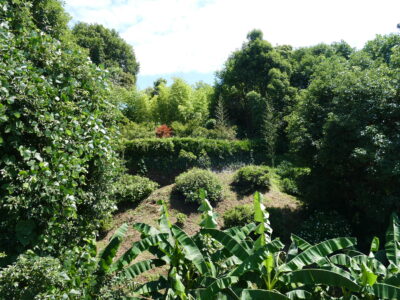
Although a change for us, after Arid Anatolia, this is not unusual on this part of the Black Sea coast which is the wettest part of the entire Caucasus region. This accounts for its lush, sub-tropical vegetation.
After completing the border formalities with little fuss, we took a break at a rather flamboyant hotel
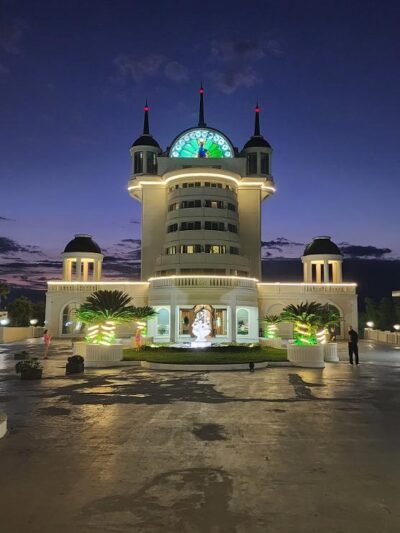
on the coast
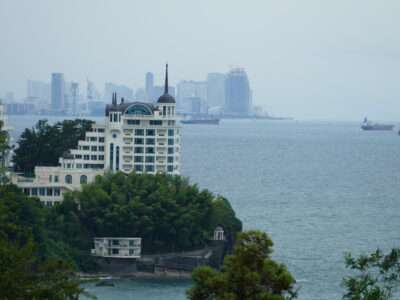
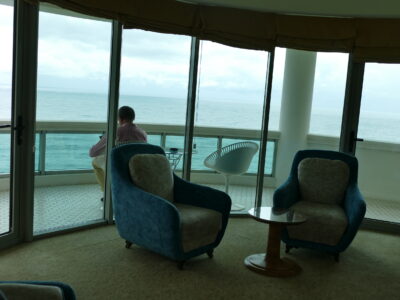
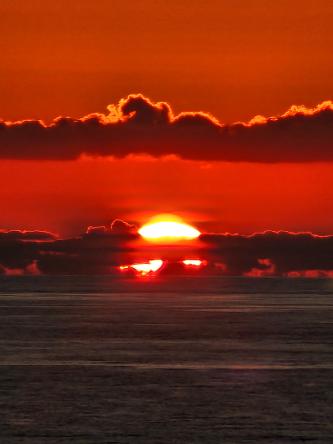
north of Batumi – Georgia’s second largest city. Despite the unsettled weather, we enjoyed a couple of wonderful sunsets.
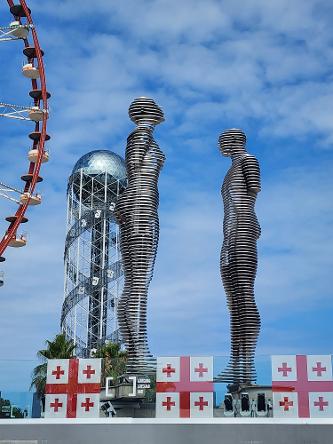
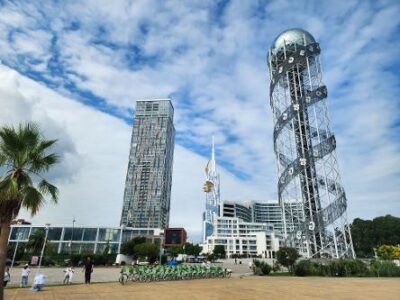
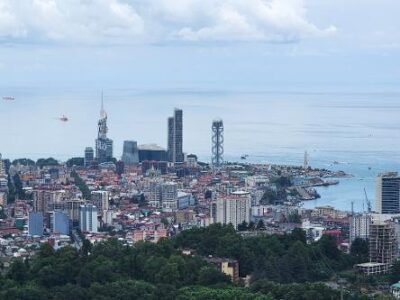
Batumi is a boomtown. Its many casinos have earned it the tag of the ‘Las Vegas of the Black Sea’. Its architecture is a vibrant mix of garish modern,
Russian imperial
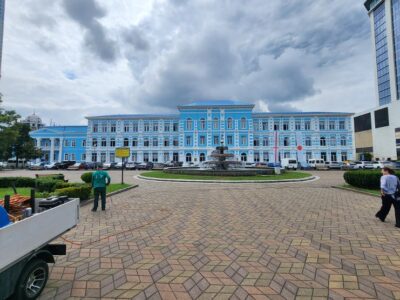
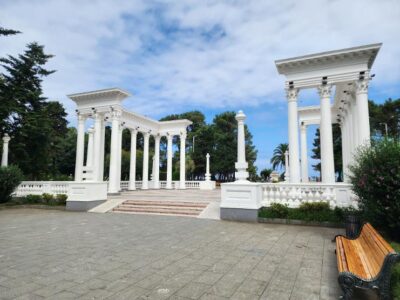
and Soviet socialist realism from the Stalinist era.
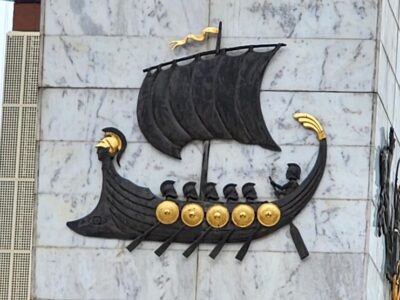
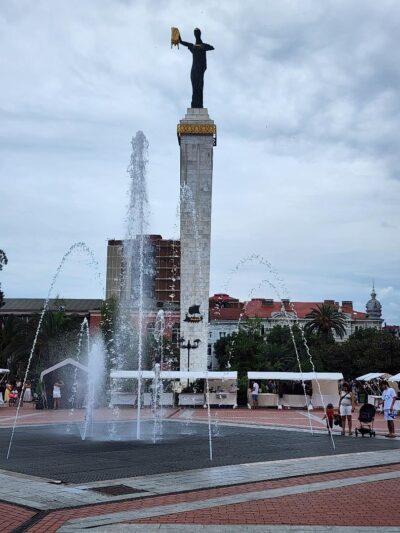
The city celebrates its location in the territory of ancient Colchis; most famous as the destination for Jason and his argonauts.
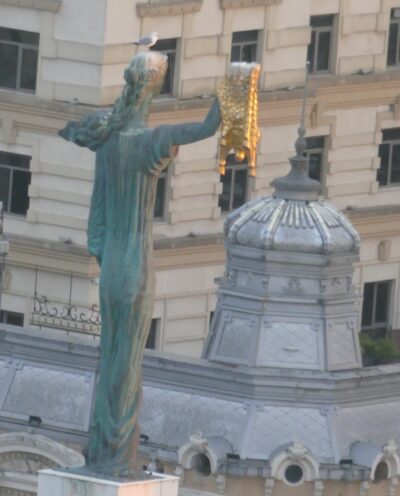
A very large statue of Medea in the centre of Europe Square
shows the Colchian princess holding aloft the mythical golden fleece.
A cable-car
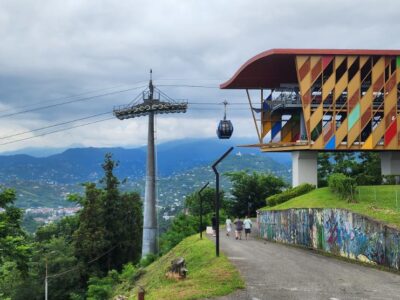
takes tourists to a lookout with great views over the city.
The ancient Petra
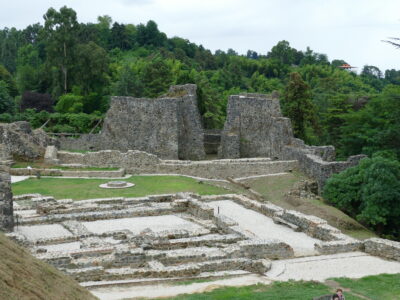
and Gonio fortresses
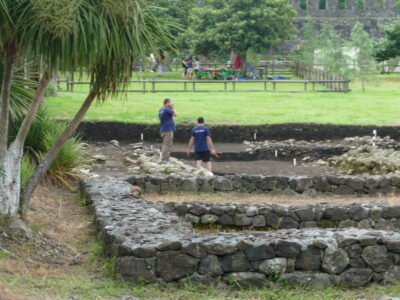
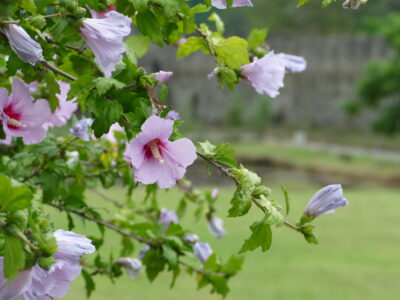
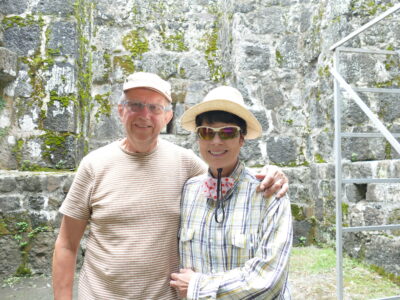
were controlled consecutively by the Romans, Byzantines and Ottoman Turks. Local tradition contends that Gonio is also the burial place of the Apostle Matthias.
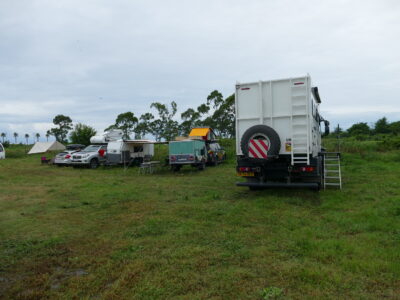
We spent a wet night at Gonio Beach – with an assortment of Georgians and Russians –
before heading inland to Kutaisi;
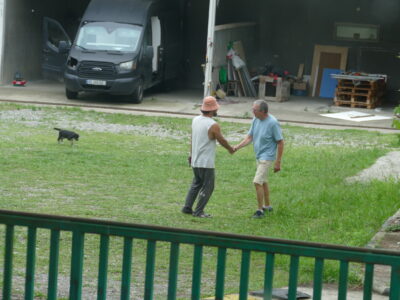
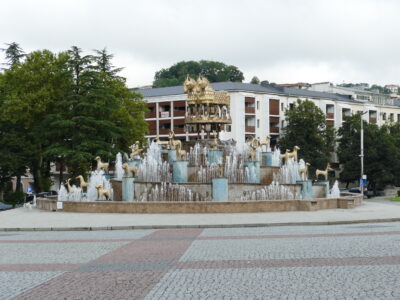
Georgia’s third largest city. It has been inhabited continuously since the sixth Century BC when it was the capital of Colchis. The over-the-top Colchis Fountain in the central square celebrates this legacy;
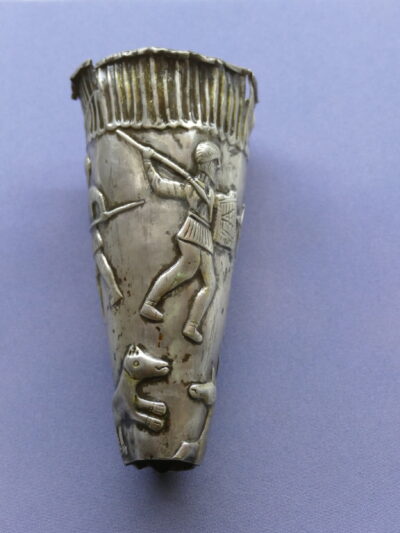
as do some of the exhibits in the Kutaisi State Historical Museum.
It was serial wedding time when we visited Bagrati Cathedral;
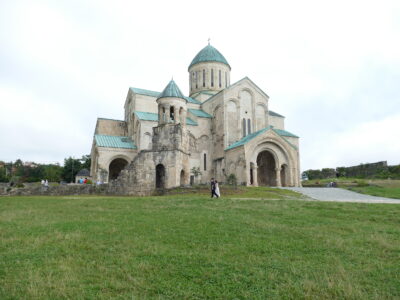
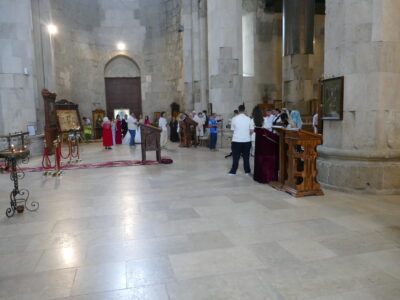
which was removed from the UNESCO World Heritage List in 2017 because of over-enthusiastic reconstruction to repair damage inflicted by the Turks in the 17th Century.
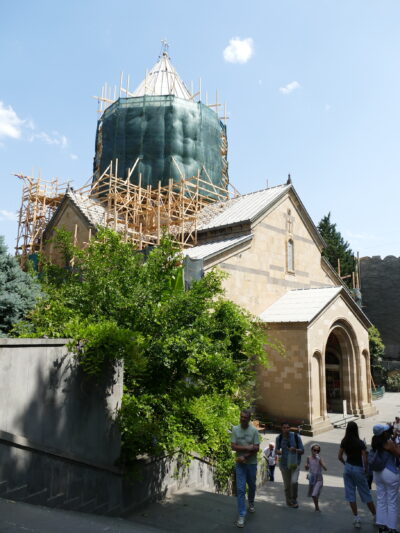
The Gelati Monastery is still on the list – though the scale of its current restoration must put that in doubt.
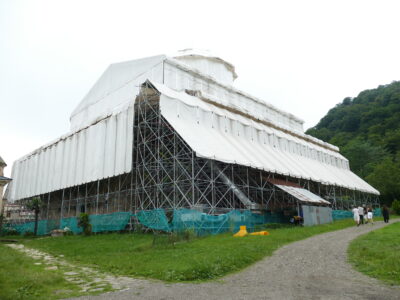
There was more scaffolding in the main church’s interior that there was in the Hagia Sofia.
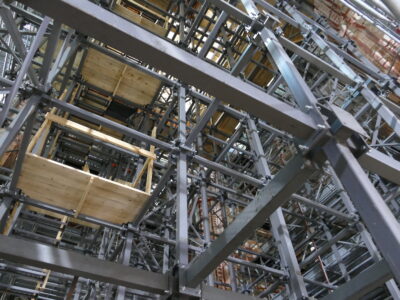
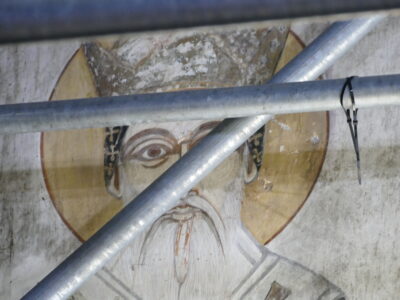
We could barely see the church’s famous frescoes through the forest of girders.
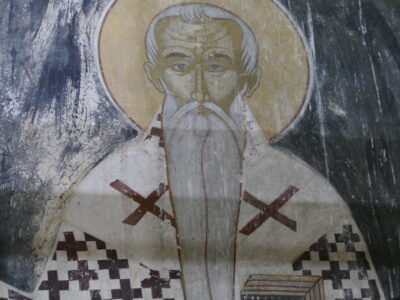
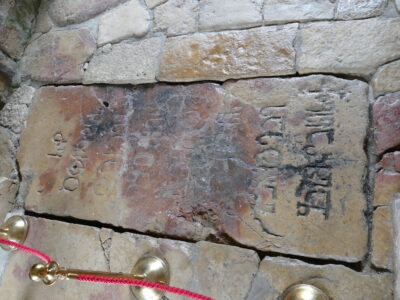
Those passing through the south entrance gate to the Monastery walk over the tombstone of King David (‘The Builder’) who defeated the Seljuk Turks and unified the country in the early 12th Century.
The Motsameta
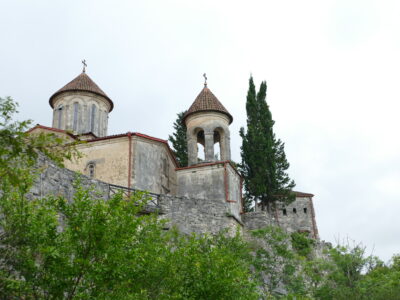
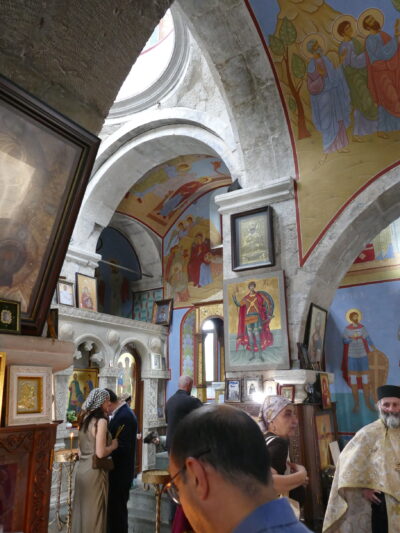
and Martvili
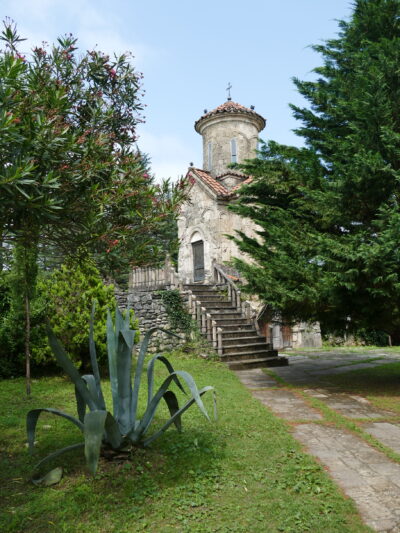
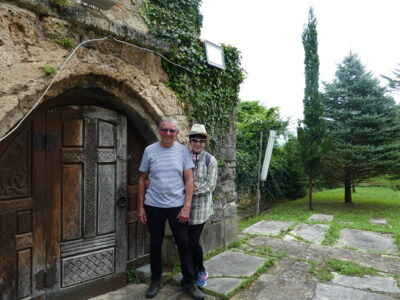
monasteries are perched on the peaks of craggy hills in this region of forests,
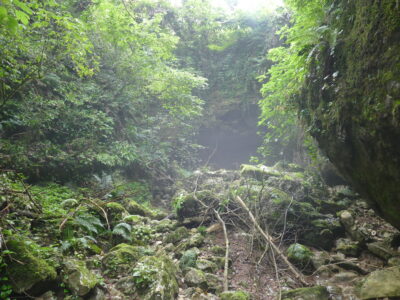
canyons
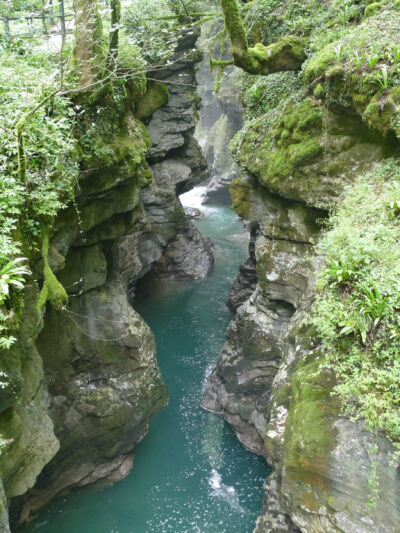
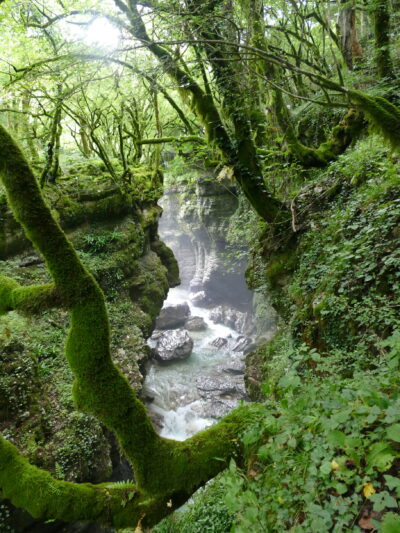
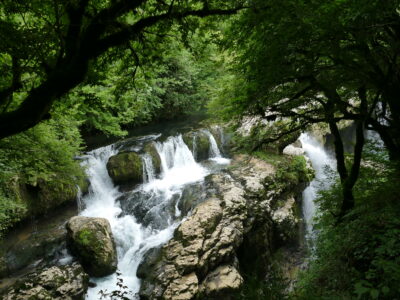
and caves.
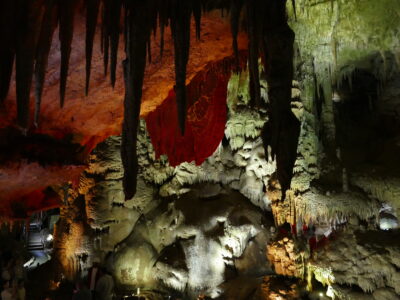
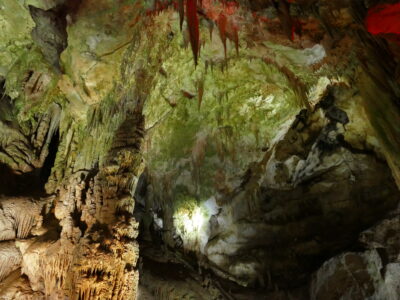
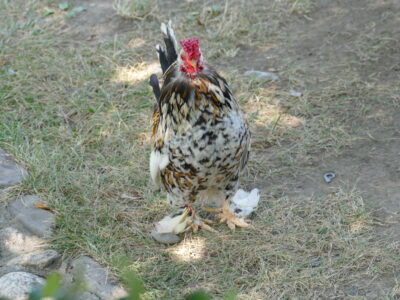
Driving in Georgia is not for the faint-hearted. Road markings are at best ambiguous and Georgians will move to occupy any gap that gives them an edge over other drivers. Drivers share the road with animals – chickens, geese, pigs
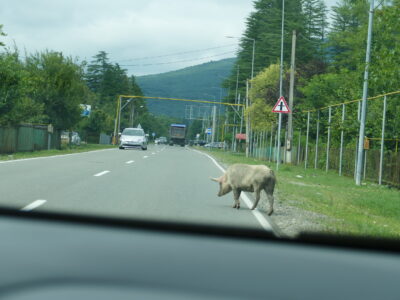
and, in particular, cows.
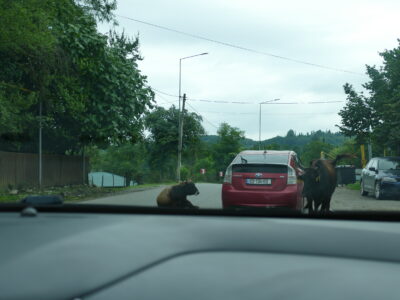
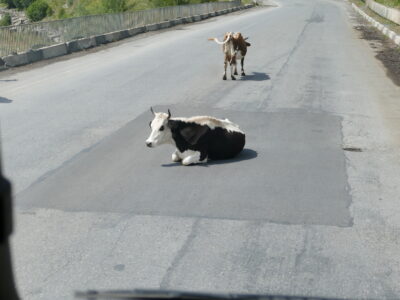
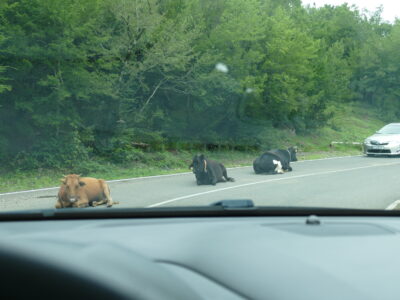
They are totally unfazed by traffic and it is not unusual to pass one on the motorway grazing the central reservation or lying in one of the carriage-ways. Our theory is that this is allowed for two reasons – firstly, it slows down the reckless drivers (who have no choice but to give way) and secondly, it keeps the roadside verges trim.
Gori is a sleepy town with one modern claim to fame – it was the birthplace of Joseph Stalin.
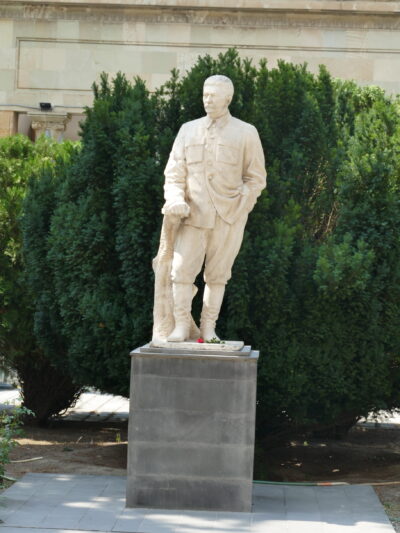
The eponymous museum was constructed during the Dictator’s lifetime and opened in 1957 when Georgia was very much part of the Soviet Union. Other than a small room that alludes to Stalin’s ‘Gulag era’, the museum is largely unchanged since then.
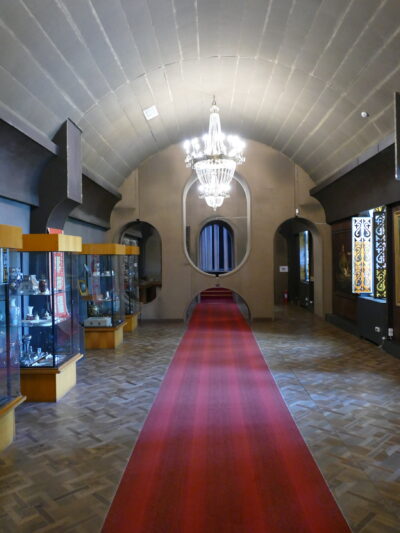
Born Loseb Dzhugashvili, Stalin was educated in the Gori and attended a local seminary.
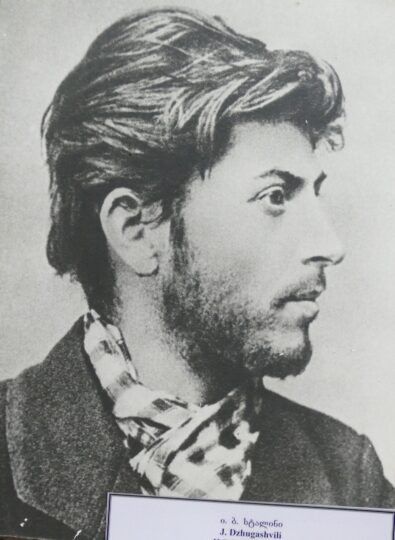
He was there when recruited into a revolutionary clique that eventually triggered the revolution – the rest is history.
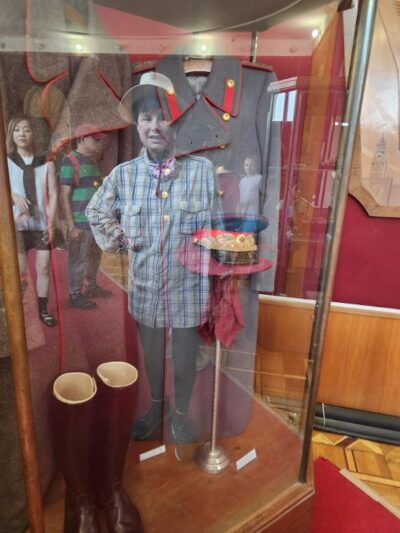
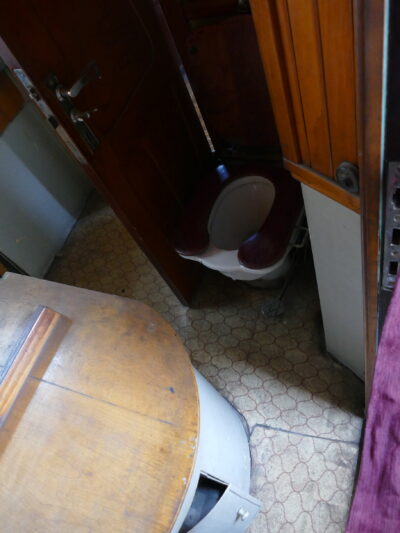
Perhaps the most interesting exhibit is Stalin’s private train carriage;
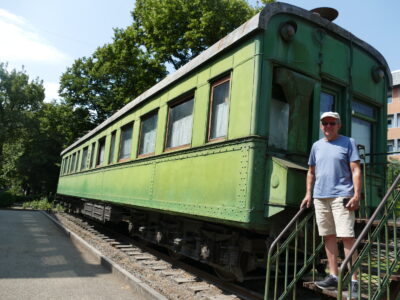
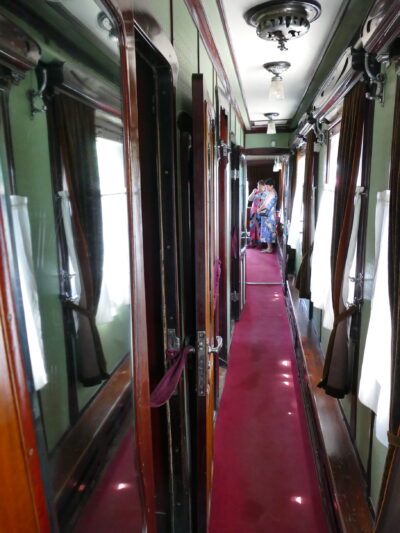
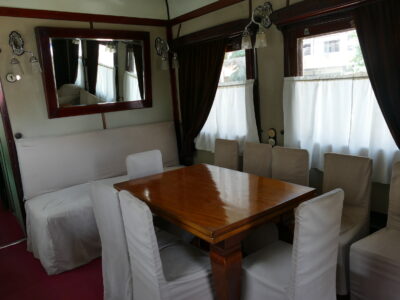
complete with his personal, private toilet.
Mother Georgia,
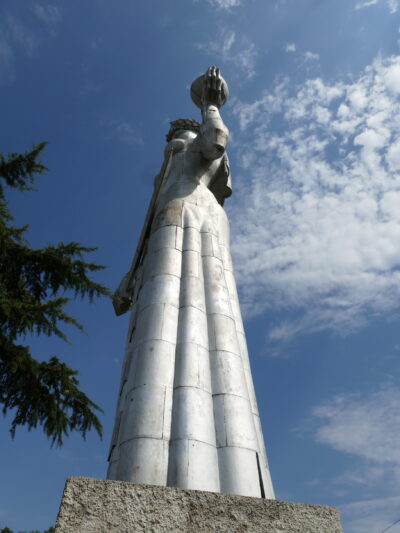
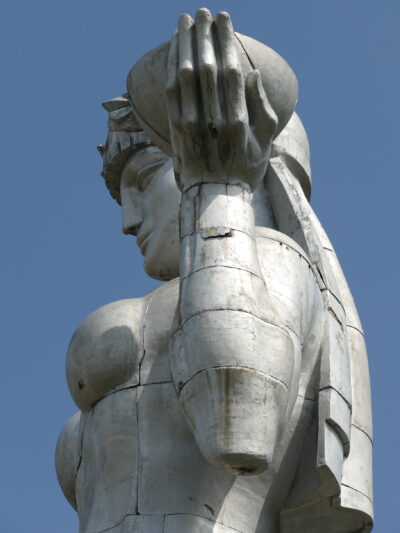
cup of wine in one hand, sword in the other, overlooks the capital, Tblisi, from Sololaki Hill.
The city is undergoing a tourist boom –
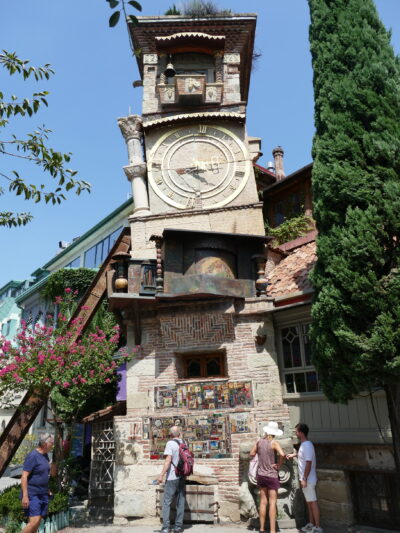
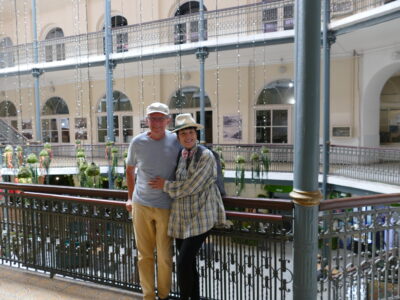
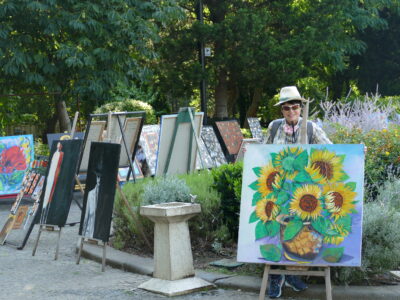
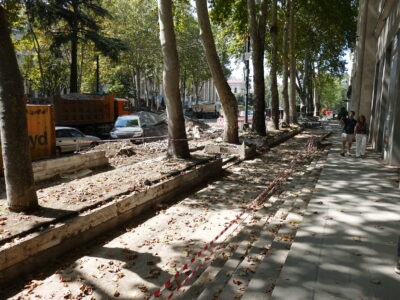
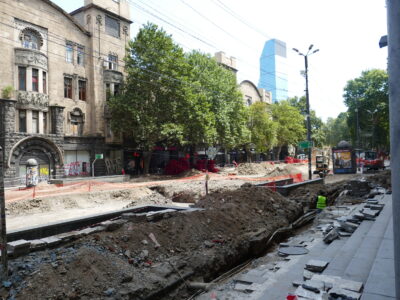
it is also a bit of a building site.
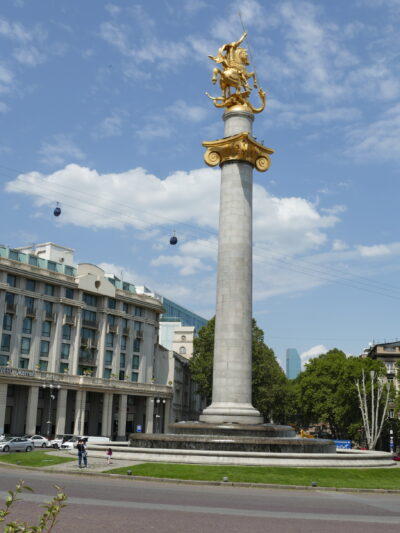
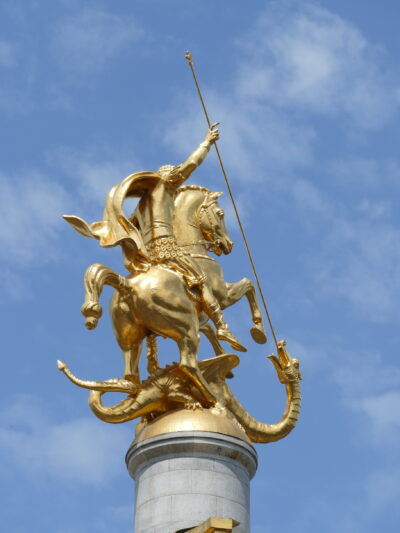
During the Soviet period, the Russians changed the name of Freedom Square to Lenin Square and erected a statue of the father of the revolution. The Georgians reclaimed the Square’s name after independence in 1991 and replaced Lenin with a gold statue of their patron saint.
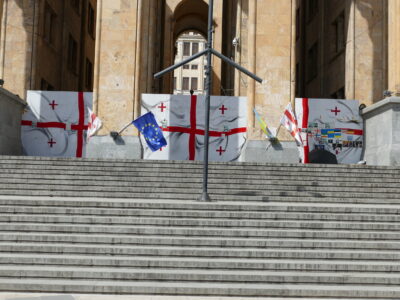
The Parliament building has been the focus of political unrest before and since independence. The stark monument to the 21 demonstrators killed by Soviet troops in 1989
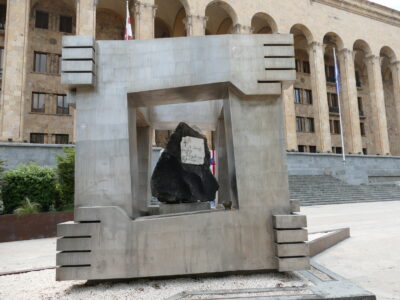
sits beside posters and EU flags protesting at the disputed election in 2024; after which the new Government pushed back the process for accession to the EU.
The collection in the Georgian Museum of Fine Arts (amassed by the daughter of former Georgian President Eduard Shevardnadze) also reflects Georgia’s recent turbulent history; including its struggle to be free from Soviet rule.
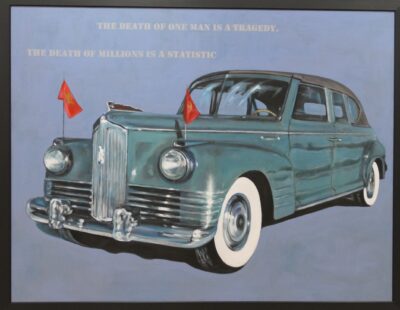
(‘The death of one man is a tragedy. The death of millions is a statistic.’ Is a saying attributed (probably incorrectly) to Stalin.
On our way north, we stopped at the Jvari Monastery;
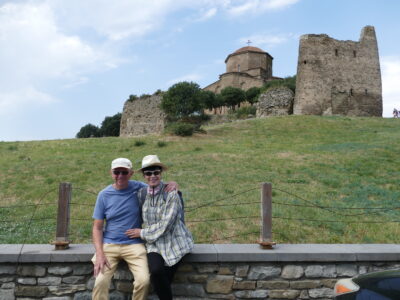
built in the Sixth Century on the site where St Nino is said to have erected a wooden cross
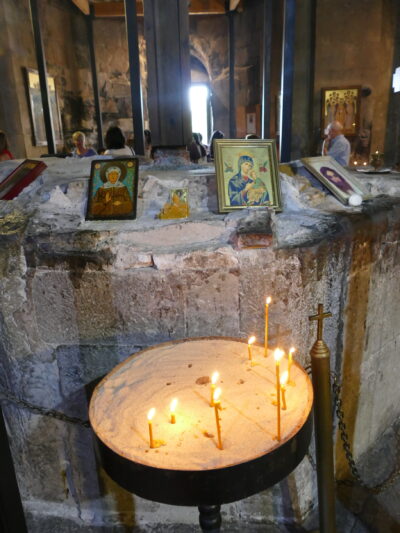
after converting King Mirian III. This led to Georgia becoming a Christian state in 337 AD (tradition has it that the Georgia Orthodox Church traces its roots back further to the mission of the Apostle Andrew).
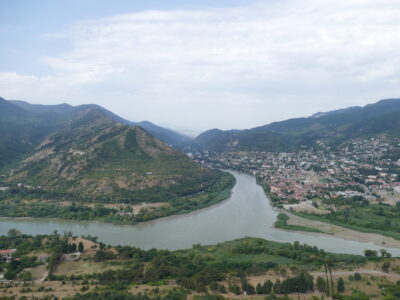
The monastery is another of Georgia’s UNESCO World Heritage Sites and there are views from the hilltop over the place where the Rivers Mtkvari and Aragvi meet.
We took the ‘Georgian Military Road’ 150 Km north from Tblisi, over the 2,400 metre high Jvari Pass and into the high Caucasus mountains (whose 1200 Km range runs from the Black Sea to the Caspian Sea).
On the way, we passed the colourful Russia-Georgia Friendship Monument
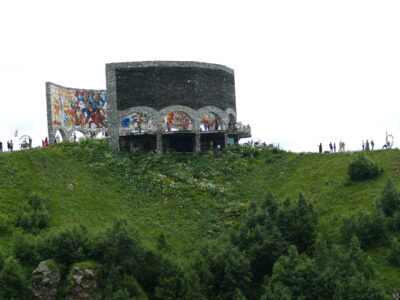
which overlooks a deep mountain gorge
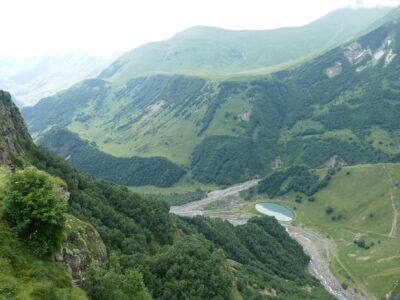
and was built at a time when the relationship was more cordial. We passed a long line of trucks moving to or from Russia
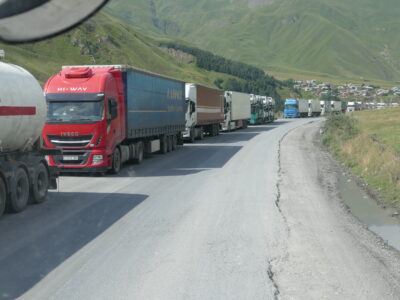
before reaching Stepantsminda – just 12 Km south of the border.
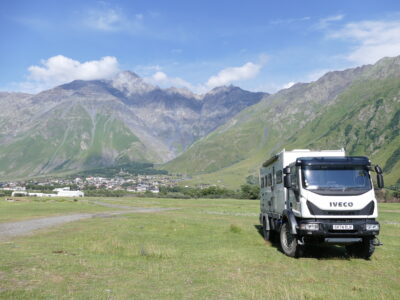
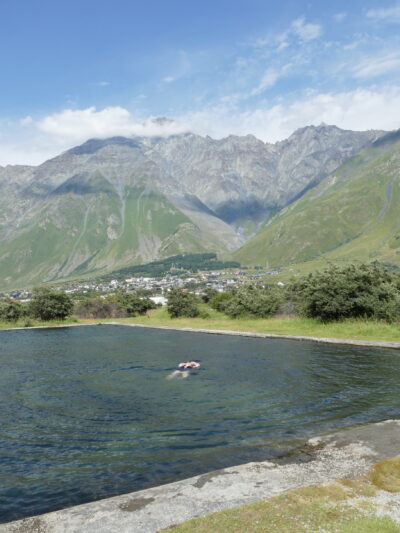
We camped beside a spring and pool of very cold, carbonated water.
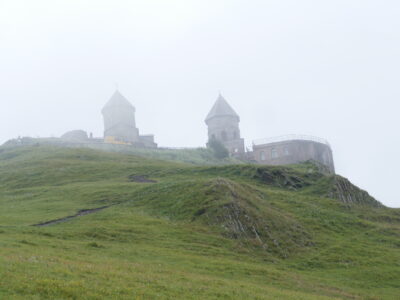
It was an uphill trek,
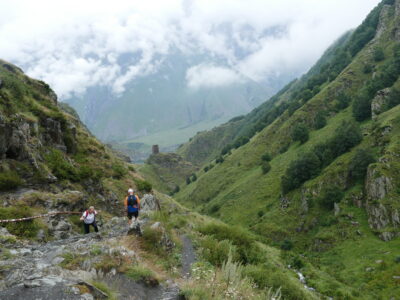
on a damp and misty morning
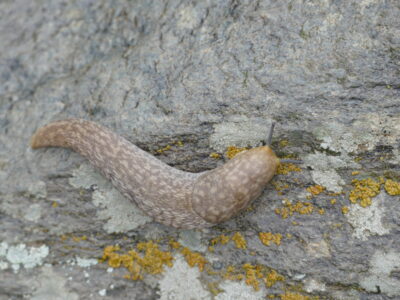
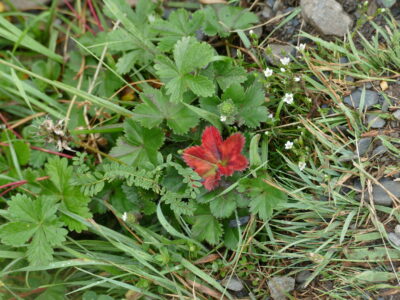
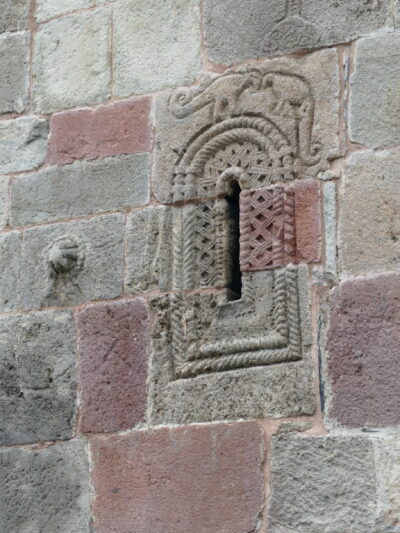
to the Gergeti Trinity Church.
We headed back to Tblisis and then east; taking the extremely winding road over the Gombori Pass into Kakheti and the heart of Georgian winemaking.
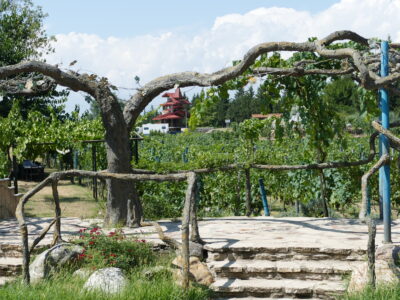
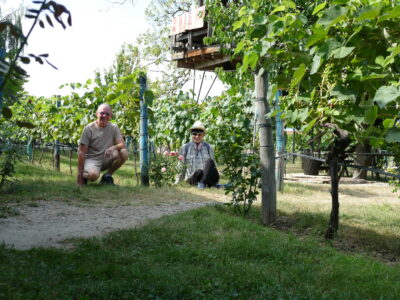
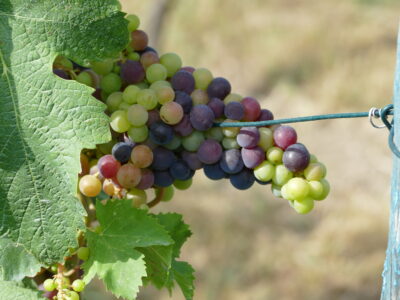
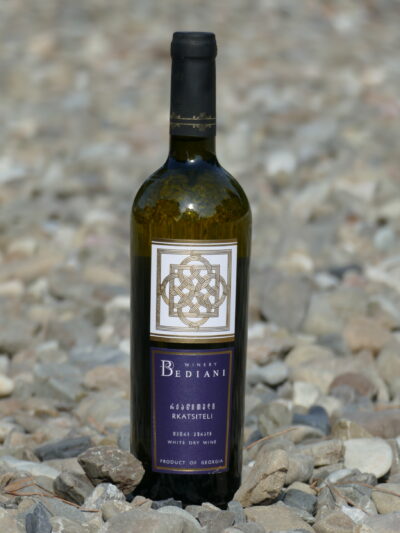
The Georgians believe that they were the first to make wine – some 8,000 years ago – and then spread the word to the rest of us.
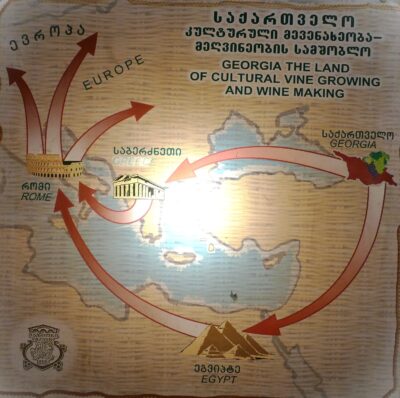
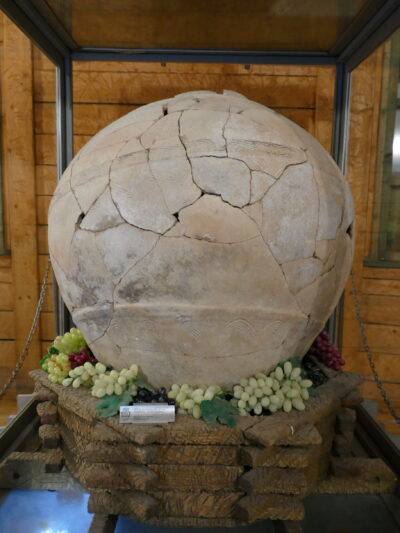
There is strong archaeological evidence to support their belief.
Wine production dominates the local culture and economy. Erekli II, the 18th-century monarch of eastern Georgia (whose palace is in Telavi)
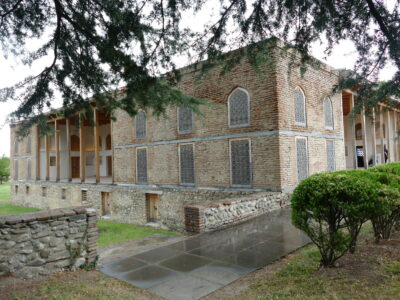
based his tax system on the vineyards. Prince Alexander Chavchavadze, whose house is now a museum,
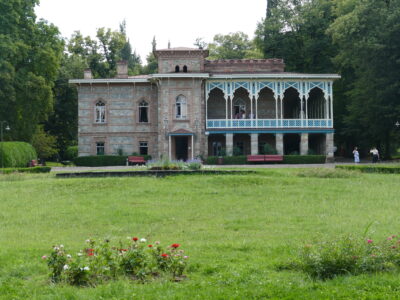
was the first person to make wine using the ‘European method’. The Alaverdi Monastery has been producing wine since it was built in the 11th Century.
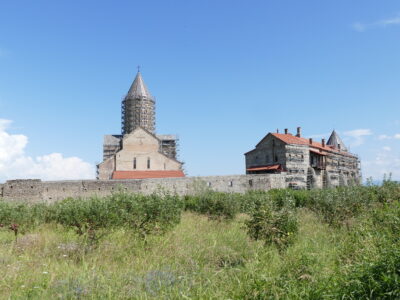
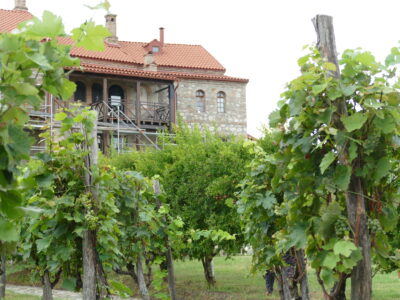
Today, the Badagoni Winery supports the monastery to make wine in the traditional manner – fermenting grapes with skins and stems in buried clay vessels (qvevri). In contrast, Badagoni, named after the ancient Georgian God of Wine –
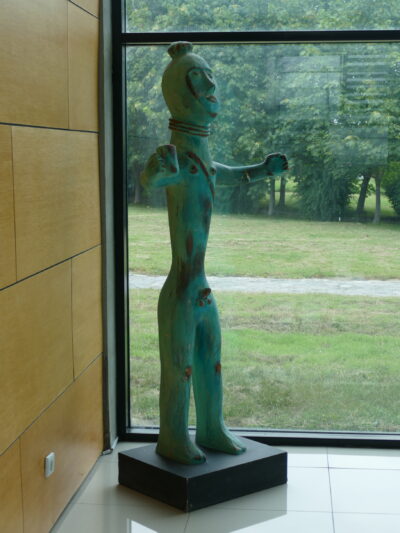
who is said to pre-date Dionysus his Greek counterpart – also produces more than 12 Million bottles of wine each year at its state of the art winery.
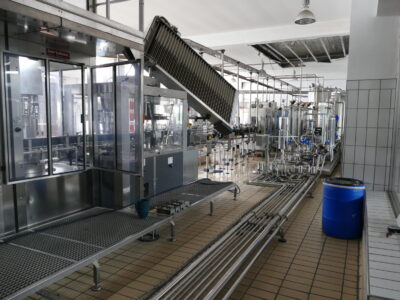
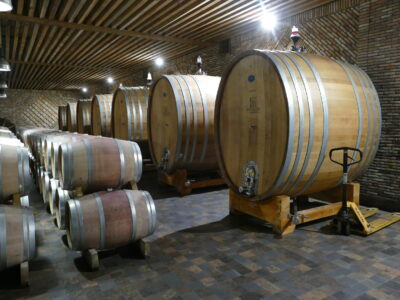
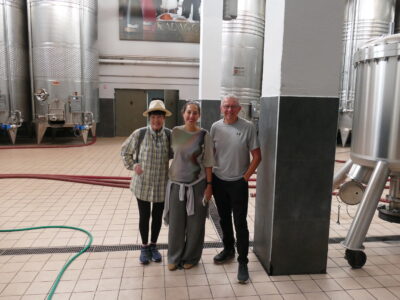
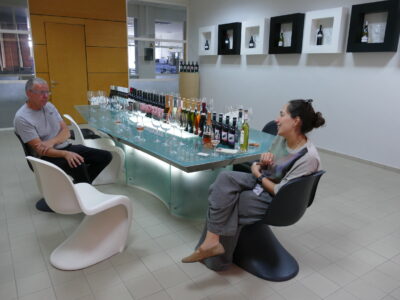
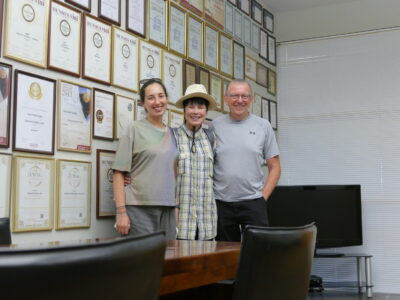
We were shown round by Salome, a member of the family that owns the business.
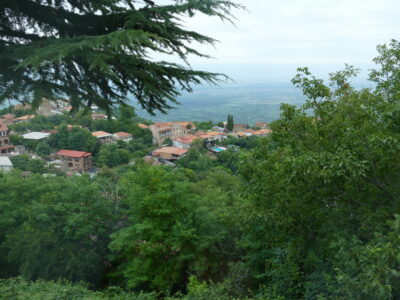
The town of Sighnaghi sits on a hilltop overlooking the Alazani Valley.
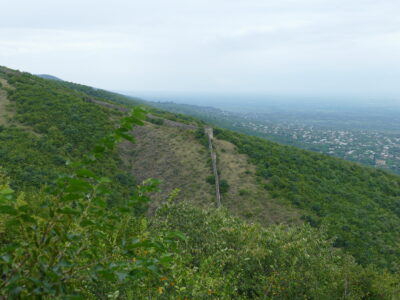
Apart from the view, it is known for its city wall,
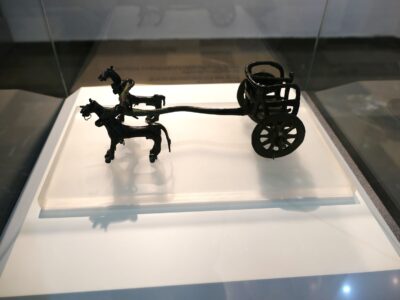
and small museum; with its wonderful bronze-age artefacts
and Georgian artworks.
On our way back west, we had time to cram in one final monastery – the Davit Gareja complex;
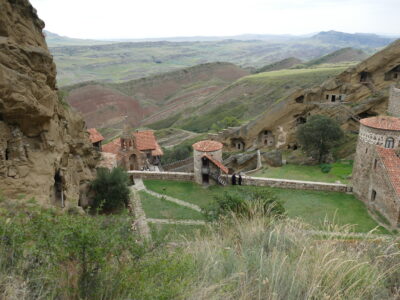
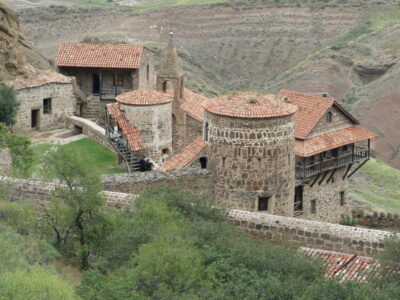
so close to Azerbaijan that Google Maps indicates that part of the access road actually crosses the border (the closest we were going to get to Azerbaijan!). The semi-arid steppe around Ubadno
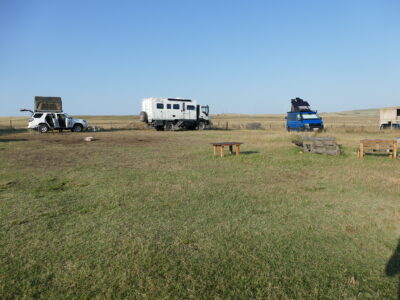
is home to domestic goats descended from the wild ibex
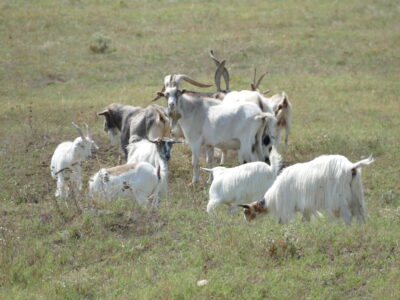
and, at this time of year is visited by flocks of migrating white storks.
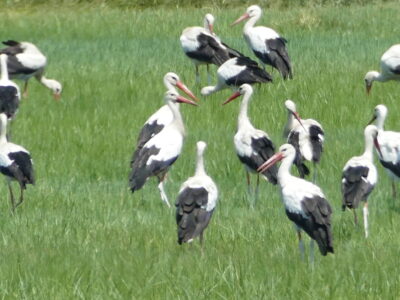
We spent our last night in Georgia by the side of the road a few hundred metres from the Armenian border.
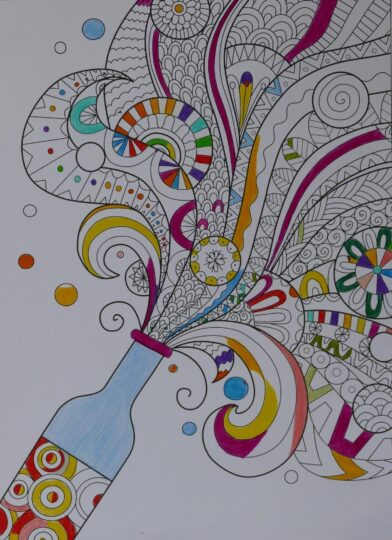
Danielle’s celebration of Georgia’s 8,000 years of wine-making.
You are now venturing into territory about which I know virtually nothing!
Fascinating….
Just caught up (again) with your amazing journey. Stunning photo’s, as ever and bringing to life so many incredible places we’d never even heard of. Stay safe.
Well Paul and Danielle, you never stand still! Do you?
Beats dodging heatwaves and going to Tesco’s.
What a journey.
I’ve decided to become a Georgian scaffolder. Any introductions welcome 🤗
XXX
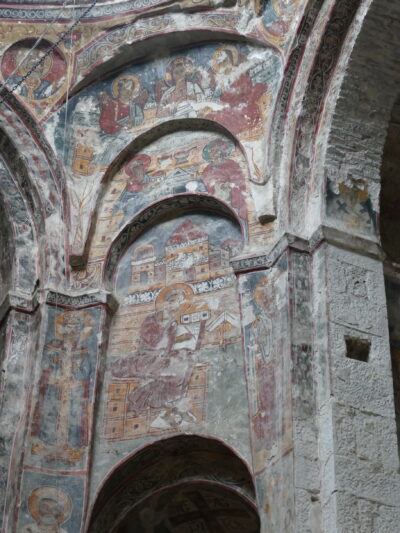
Quite a paradise! I expect those painted walls in the monastery are a bit like how the interiors of our English churches looked before the Puritans arrived with their buckets of whitewash…
Stalin’s loo! Surprised you didn’t pose for a picture. Actually, quite glad you didn’t…
So many different types of architecture we weren’t expecting to see. Thanks for sharing from modern to ancient. The caves and canyon looked impressive but not sure about the varied livestock in the road!
This is all soooo different! I do love that cathedral with the blue roofs, even if snubbed by UNESCO, it has lovely lines. And as for Stalin’s loo, don’t we know how important a reliable loo is in your travelling vehicle…… :-). I hope you have been enjoying the Georgian food, like khachapuri, and there was this wonderful spread of beetroot, walnut and garlic which I have never quite managed to perfectly execute. And the wines, of course! Enjoy and I’m looking forward to see what is next! Love from Anna & Hugh
Cows in the road remind me of our Indian sojourn.
Most of them were black and thus invisible at night.
Difficult to know who would come off worse in a collision. Bovine or Scooterine. Suspect the latter…
A lot about Georgian wine. Looks like several samples were tasted. Begs the question – was it any good?
I remember Russian “champagne” in Moscow and it wasn’t (though in the absence of anything else, apart from tumblers of vodka, it did get consumed…)
Love the wine picture Danielle!
I find the history of the wine very interesting, and so, we must visit the factory when we return
Hello Paul & Danielle, From natural carbonated water to different processes of making wine. We found this interesting and didn’t know it was a wine making region. We love Danielle’s picture!